





Castagnito - Oratory of the Holy Spirit
Nothing in the Roero landscape seems to be left to chance. Where there is no vineyard, there will be hazelnut groves or an orderly planting of fruit trees. And then, near hamlets and farmhouses, vegetable...
Nothing in the Roero landscape seems to be left to chance. Where there is no vineyard, there will be hazelnut groves or an orderly planting of fruit trees. And then, near hamlets and farmhouses, vegetable gardens and gardens, which become sumptuous beyond the walls of villas and castles. The starting point is the oratory of the Santo Spirito in Castagnito, where the proposed narration enlightens us on the activities of an eighteenth-century confraternity, and above all on the role that women played in that context. The century of baroque and rococo does not leave us even along the way, because the massive castle of Guarene, the more austere castle of Castellinaldo and the Alfieri residence in Magliano tower over the "bric". It should be noted that the Confraternity of the Holy Spirit in Castagnito will open its doors thanks to the Chiese a Porte Aperte app. Churches with open doors is a system for the opening and automated narration of churches in Piedmont and Valle d'Aosta. Download the App Churches with open doors. For info: www.cittaecattedrali.it.

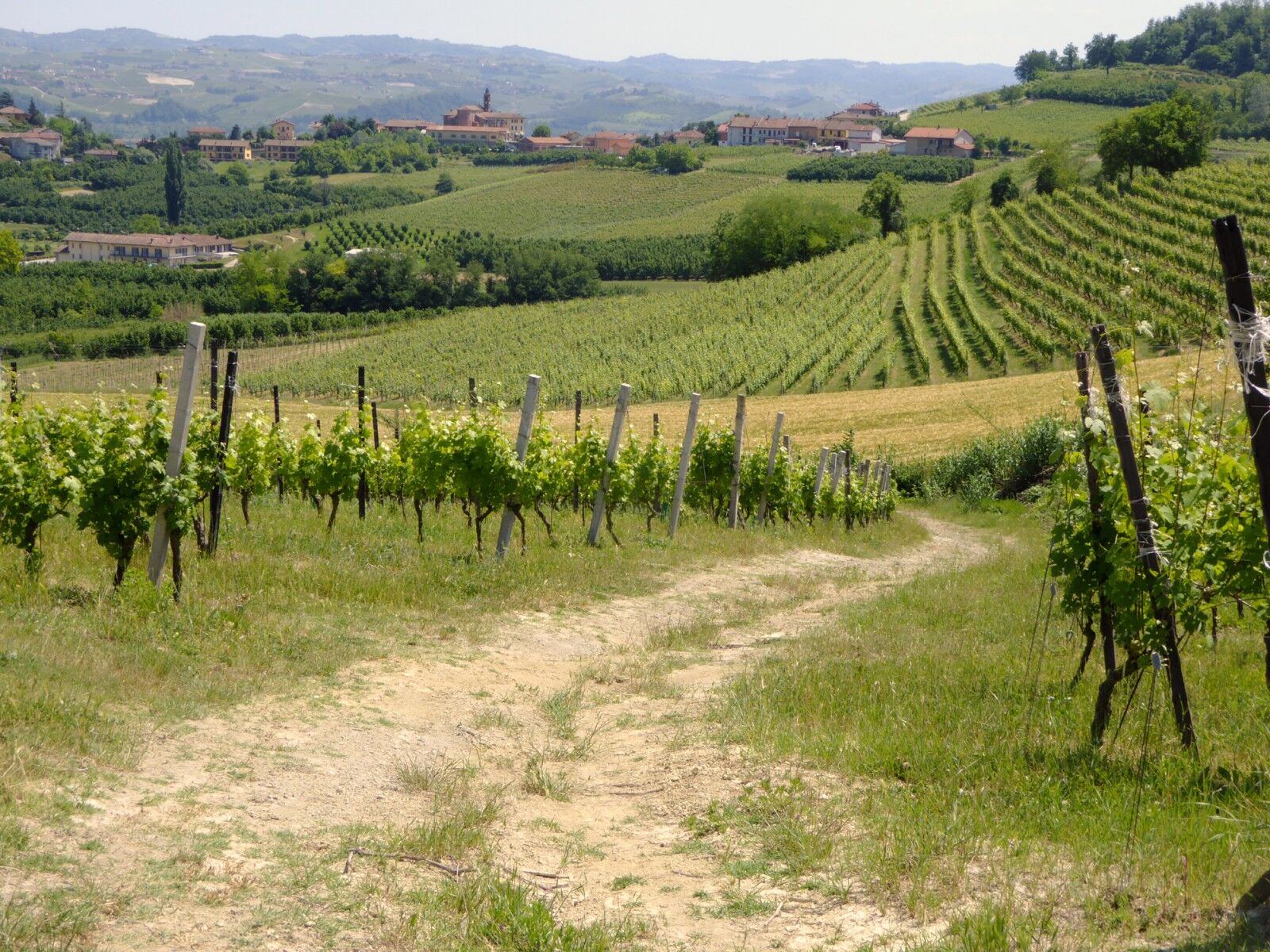
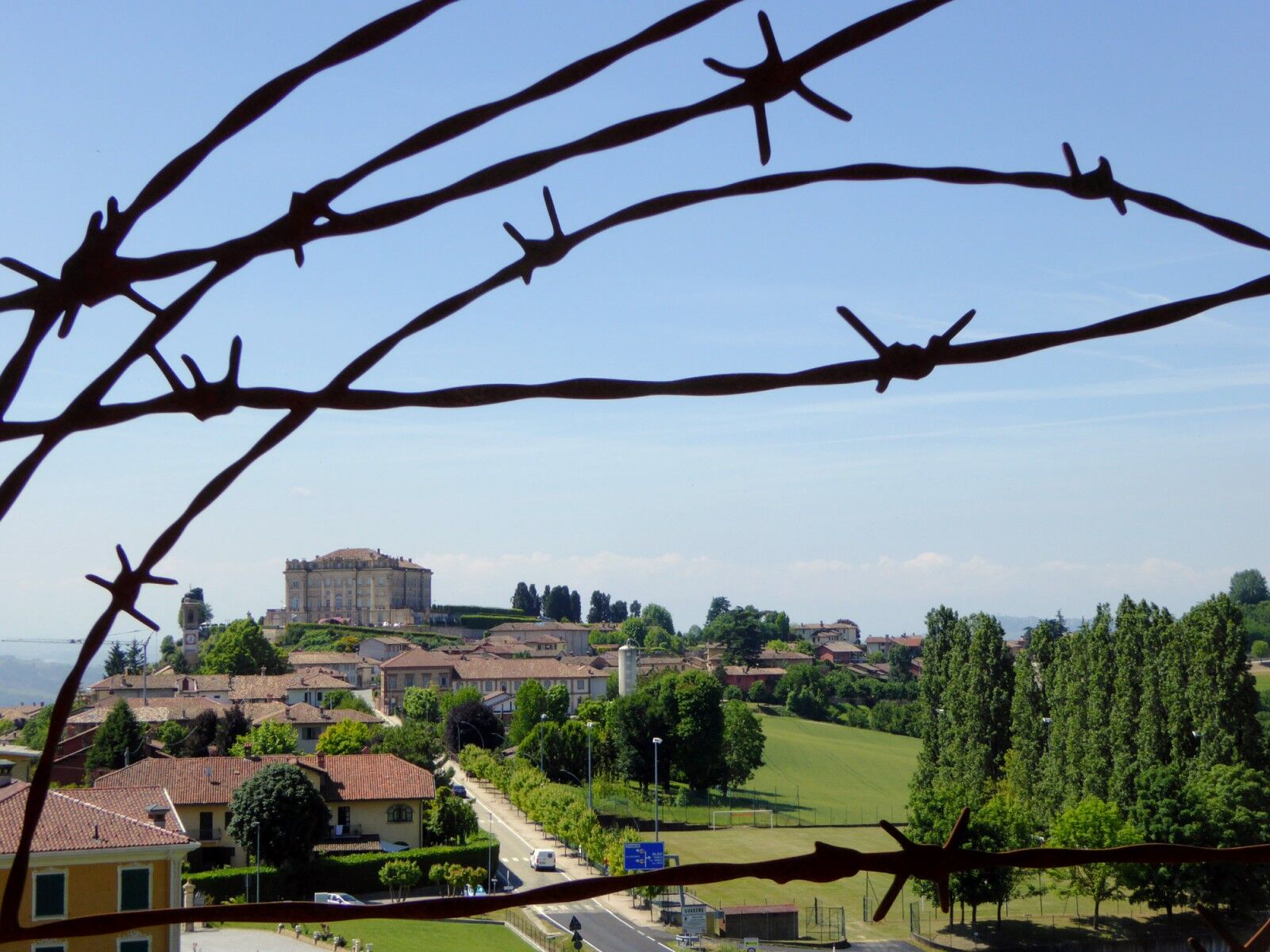
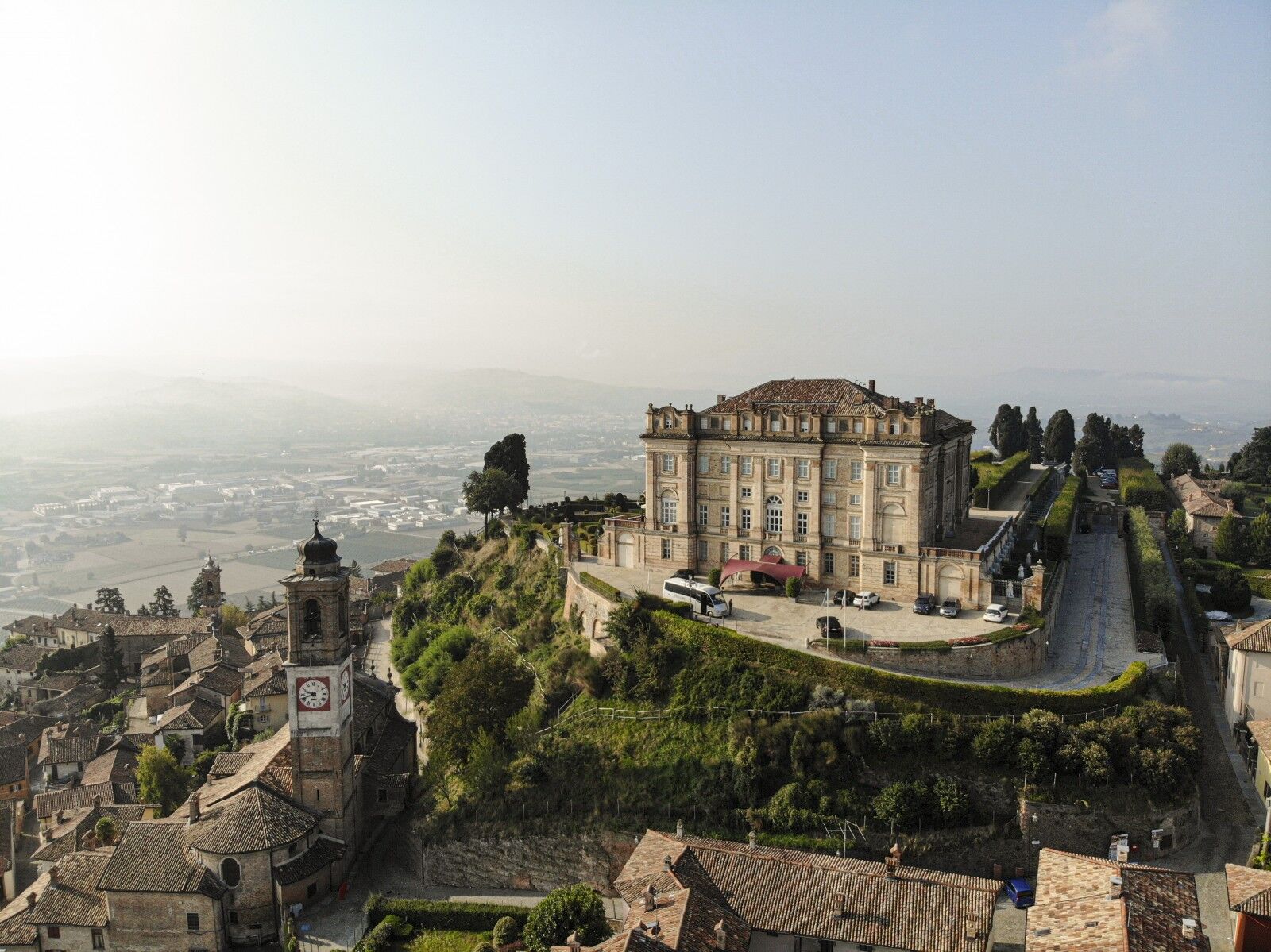
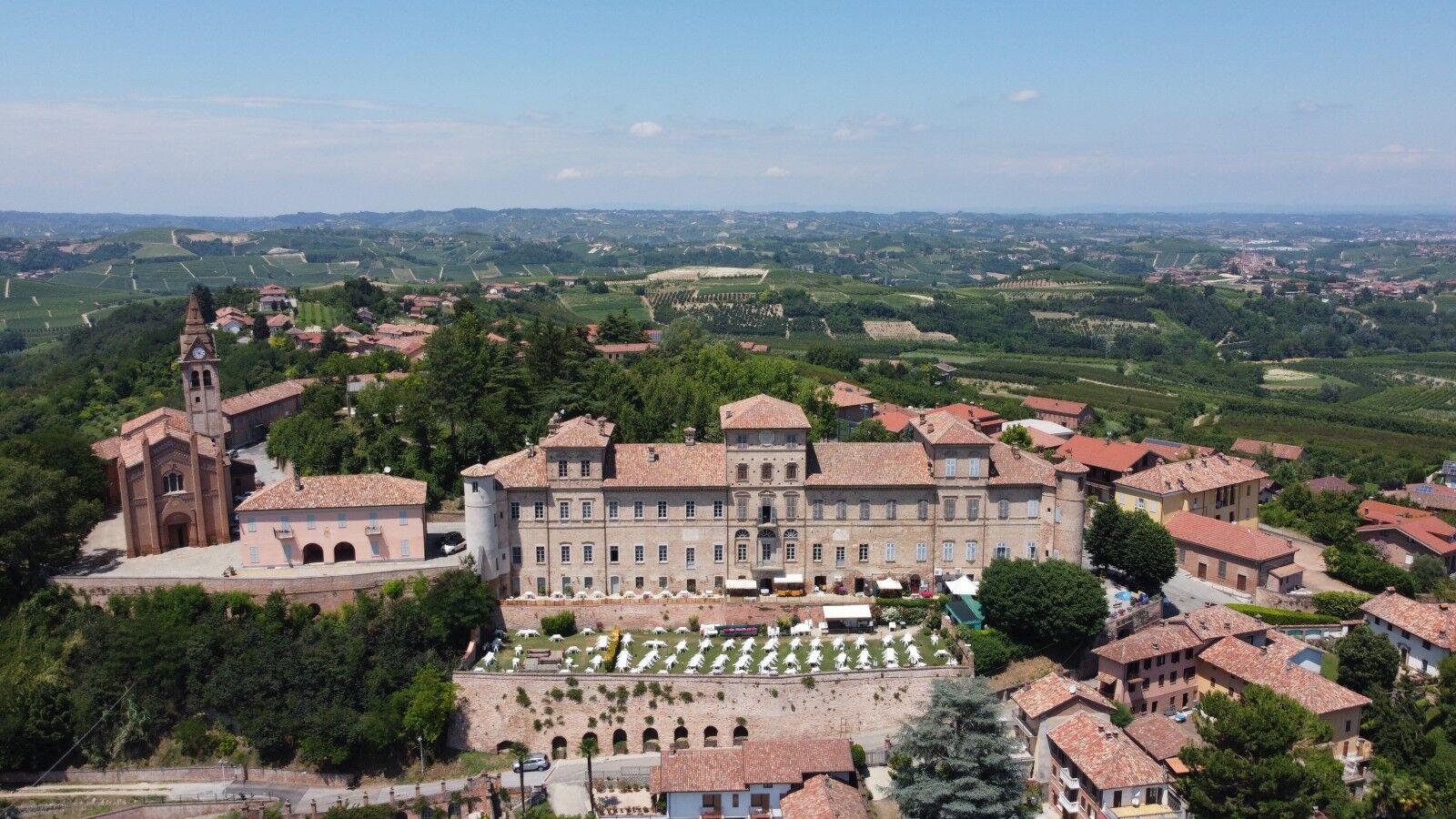

The starting point of the route is the oratory of Santo Spirito in Castagnito: from here the walk begins uphill, on the long staircase to the top of the hill on which the oldest nucleus of Castagnito stands, with the parish church and - opposite - the oratory of the Holy Spirit. Beyond the beautiful Baroque facade in brick, a material that characterizes most of the historic buildings in Roero, we shouldn't expect works of particular value in the Oratorio del Santo Spirito. However, we will find a coherent set of Baroque altars, frescoes and furnishings that tell the story of two brotherhoods, one male and the other female. These are lay mutual assistance companies that played an important role in the community between the 17th and 19th centuries. Just outside the town, here we are among the vineyards, and with beautiful views over the Tanaro plain and the foothills of the Langhe. The Guarene castle attracts attention, and the Bric San Licerio is the best observation point of the Baroque residence of the Roero counts. In fact, once we reach the town, we will discover that from the alleys of the concentric it is barely visible, protected by high walls, reserved for guests of the luxury hotel into which it has recently been transformed. The descent towards Guarene is then embellished with beautiful contemporary art installations, thanks to the presence in the village of a headquarters of the Sandretto Re Rebaudengo Foundation. We leave the village, a panoramic balcony over the Langhe, to resume our journey in the rural landscape and to discover Madernassa, a fraction of Vezza d'Alba, the birthplace of one of its most prestigious products, the Madernassa pear. A table reminds us of this, on the site where the progenitor pear tree was born.And Vezza d'Alba is that village nestled at the foot of a rocky outcrop, the Rocca, which in the past housed another and more ancient castle of the Roero counts. We see it on the ascent, behind us, while in front, on the ridge, are the baroque spirals of the San Rocco oratory, at the gates of Castagnito. In fact, we haven't gone too far from the village, and now we're going around it, walking through the Arneis and Favorita vineyards, to descend into the San Giuseppe valley, already in sight of the houses of the hamlet. We close the ring with the ascent to Castagnito, still among the vineyards, not without taking a last breath in the shade of an oak tree, at the solitary chapel of Santo Stefano del Maso.
A frescoed vault, three altars and choir stalls for the brethren, a gallery for the sisters: a snug and intimate interior is what you will see on opening the door. The church, built between 1708 and 1719 on the site of an older chapel, was the seat of several lay mutual aid societies operating in Castagnito since the 16th century. Next to one of the altars we also see the type of simple and unadorned garments worn by men and women engaged in charitable activities, in which people from all walks of life took part. The male brotherhood that owned the oratory was the White Flagellants, but the subjects depicted on the side altars, run by sisterhoods, refer to themes dear to female devotion. The Education of the Virgin, represented as a child reading about her high destiny with St Anne, her mother, protector of women in labour, is the theme of the right altar. The figure of St Elizabeth of Hungary, patron saint of bakers and health workers, is striking on the left altar, carrying roses in her lap. The flowers are an attribute of her holiness because they miraculously appeared in place of the loaves of bread she took from the royal table to give to the poor when her husband asked her to account for what she was hiding in her apron.
The Madernassa pear
The parent tree of this variety was born by chance from seed in 1784, and is probably a spontaneous cross between the Martin Sec pear and the wild pear tree. Why is it so special? Crunchy and suitable for cooking with wine and spices, it is the star of autumn cuisine. In peasant culture, because of its longevity - it keeps well after Christmas - it was an important source of vitamins during the long winters in the Roero. The original pear tree has not existed for many years, but all the plantations found today in the Langhe and Roero come from its cuttings.
The Confraternity of the Holy Spirit in Castagnito will open its doors thanks to the Churches with Open Doors app, which is an automated opening and narration system for churches in Piedmont and Valle d'Aosta. Download the Churches with Open Doors app. For info: www.cittaecattedrali.it.


Oblíbené prohlídky v okolí
-
Arch 3 | From Casale Monferrato to Racconigi
heavyCyklistika na velkou vzdálenost 143.4 km -
PRALORMO - Ring around the Lake of the Thorn
Jízda na kole 11.3 km -
4.0
BTB - Bar To Bar - Stage 1: Alba - Treiso
středníTuristika 16.1 km -
VILLASTELLONE - Ring from Borgo Cornalese toward the Roero.
středníSilniční kolo 64.4 km -
IL GRANDE CAMMINO DEL MONFERRATO - 5°TAPPA: ASTI - CASTAGNOLE LANZE
heavyPoutní stezka 21.8 km -
Via dei Briganti | Stage 1 Cisterna d'Asti - Ferrere
světloTuristika 10.2 km -
Via dei Santi | Stage 2 Celle Enomondo San Pancrazio - Tigliole Hamlet San Carlo
světloTuristika 7.32 km -
Via dei Santi: Stage 1 San Martino Alfieri - Celle Enomondo Fraz. San Pancrazio
světloTuristika 6.93 km -
Street of the Saints | Variant 1B Crossroads Rio Cravina - San Pancrazio Celle Enomondo Stage 1 at Rio Cravina - Celle Enomondo hamlet San Pancrazio
světloTuristika 11.4 km -
Water Street | Stage 1 Tigliole Fraz. San Carlo - Valfenera
světloTuristika 14.4 km
Pěší turistika a stopování

Nenechte si ujít nabídky a inspiraci pro vaši příští dovolenou
Vaše e-mailová adresa byl přidán do poštovního seznamu.