


Bar To Bar in mountain bike - Tappa 3: San Bovo - Niella Belbo
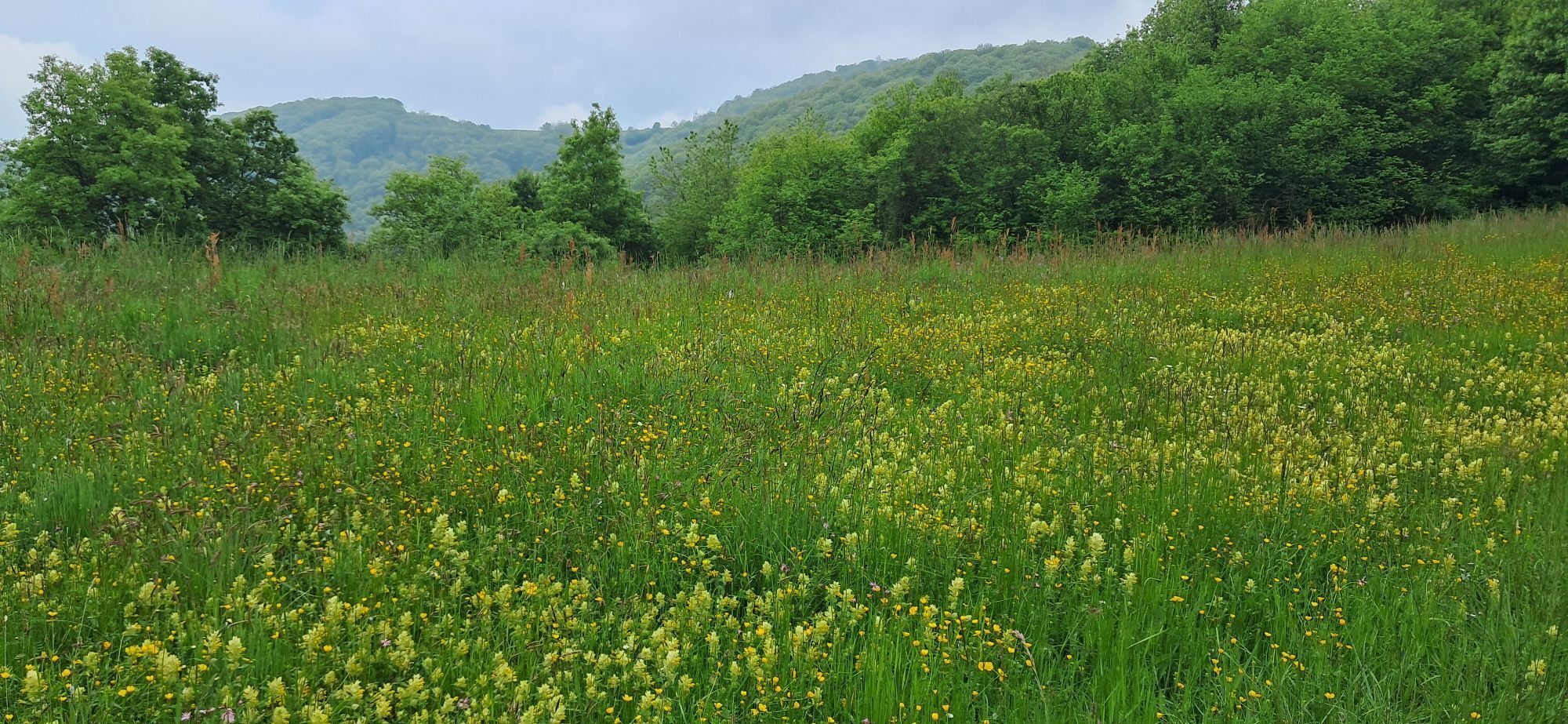
Long stop in the wildest part of the Langa, full of ancient salt routes used by merchants, isolated villages, peace and silence among woods and clearings, which offer breathtaking views. This is the land...
From the end of the San Bovo square, take the steep dirt road (S2) which will take you to the Rio Grazie (the last stretch is asphalted and keep left). In front you can still clearly see one of the three monasteries of Castino, the female one delle Grazie, now a private farm, while high up on the ridge on the right you can also see that of San Martino (now a livestock farm) the third, the Benedictine one, awaits us in village. Once you reach the stream, pass it on a U-shaped curve (with the San Bovo sign) and take the dirt road again on the left to reach Valle Belbo on the state road. We cross it to take via Molina and, after crossing the bridge over the Belbo, we go up on asphalt (S2) for about 1 km to reach an ancient fortress complete with sentry box and medieval arch with coat of arms, from where, on the right, we take the paved mule track which it climbs steeply (S2-3) up to the village of Castino, between meadows and hazelnut trees (it crosses the asphalt a couple of times, but in fact it runs straight like all mule tracks). The historic center of Castino reflects the wealth brought by three monasteries (as mentioned above) and is held, as they say, "in the honor of the world", with a curious parish church with a double façade. The castle and the ruins of the tower tell us about a centuries-old glorious history of control of the pass between Bormida, Belbo and Bassa Langa. In more recent times, the town suffered Nazi-fascist retaliation during the raids of 1944. From Castino, after a nice walk through the flower-lined streets of the ancient village, we follow the signs for the town hall and then keep left onto via San Rocco (if you continue it is worth taking a look at the small country church of the same name), to take then on the right the stone mule track that climbs (S2) up the ridge (more or less asphalted) towards the upper Belbo Valley. These mule tracks, which run along the crests of the valleys and then climb narrow and steeply from one ridge to another, are the most hidden, but perhaps most relevant, trace of the traffic and merchants who, for almost a thousand years, incessantly, crossed the salt routes from the sea to the Po Valley, making these places - now remote - the center of a world. In this sense, the Belbo Valley (like the two Bormida Valleys and the Uzzone Valley) is a continuous discovery of glorious pasts and ruined memories with a romantic flavour, which would have made Foscolo, Petöfi and Byron happy. But let's enjoy the view that takes us to the wildest Langhe, where isolated houses become truly rare and the villages curl up on a higher spur of the hill, closed in stone walls and grim fortresses.
All around, scented woods of chestnut and lime trees, gaggie and elm trees, with willows along the rittani and oaks on the peaks as legend has it, placed up there to await the lightning which, from Jupiter onwards, the gods always hurl to create the magic of White truffle. From Castino the ridge route heads towards Cravanzana, therefore passing high above Bosia, which instead rises halfway up the slope. Here we are at the Lodola crossroads (another famous place in Fenoglia, where the partisans of Poli and Mauri met after the winter of '44: we recommend the short detour) where our grassy road rejoins, as already mentioned, for a few hundred meters to the asphalt strip and then again it branches off to the right to enter the coolness of the forest. Here each path junction is marked by a pole or by special red-white signs on the trees. Finally, the road bends (D2) in a couple of hairpin bends, to reach the Viarascio road, which descends to Cortemilia among beautiful woods and clearings. Then turn right to go back up towards Cravanzana on the same asphalt road, among hazelnut groves kept as gardens, up to the crossroads of the town. Once past the crossroads, we take the entrance to the village with the avenue of the fallen and the majestic silhouette of the Marquis castle overlooking the small medieval village. Cravanzana is considered one of the capitals of the hazelnut, the “Tonda e Gentile delle Langhe” (now officially called Piedmont IGP), which from its name makes it clear that it is the best in the world. Around here it won't be difficult to find local artisans and pastry chefs. We wander through the narrow streets of the village, then exit south onto Via Ferrera and then take the dirt road again, keeping to the right. At the first crossroads, turn left, uphill into the woods (S2) until you reach a farmhouse. Keep right and, at the next farmhouse, cross the farmyard to continue on a cart track, which crosses the asphalt and continues along the ridge up to Case Codin. Here you take the asphalt again on the left for a short stretch up to Cascina Cattivi (etymology of prisoner, not of perfidy!), from which you take the dirt road on the ridge of the Bricco del Sole until practically the roundabout of the town of Feisoglio, the third village in the Upper Valley, always famous for its mushrooms, where the Parish Church of San Lorenzo is certainly worth a visit. Opposite the town are the perched villages on the other side of the Belbo: Arguello (facing Cravanzana), Cerretto Langhe (just opposite) and the hamlet of Villa di Serravalle (headquarters of a partisan command). After passing the town on asphalt, take a left at the first crossroads (signposted), along a road which shortly after becomes a dirt road and continues towards the right. You go up (S1) a little further into the woods, to then emerge on the plain, the watershed between the valleys in an open field. The sea air (the so-called "marin") will ruffle our hair, filling our nostrils with Mediterranean aromas. After about 2 km of asphalt, turn left and, after a short descent, immediately right, almost in a "U", again on gravel, to return between vegetable gardens and fields on the panoramic ridge. Continue until the next asphalt where you go straight towards the "Spianata dell'Amore" which is not a meeting place for couples, but the memory of a medieval legend with the good knight Leone (we are precisely on Monte Leone) who fell in love with the local farmer, this place was the theater of their love. Which, however, proves the good taste of medieval troubadours in choosing places! The floor, in fact, opens up to the four winds and is embellished with a giant bench by designer Chris Bangle, which allows you to appreciate the 360° landscape even more. The church of San Giovanni, in severe Langa stone, awaits us at the last crossroads, to descend gently to the right onto the village of Niella Belbo.



Ano
By car: A6 – Torino Savona, Marene or Carmagnola exit / A21 – Torino Piacenza, Asti Est exit / A33 – Asti Cuneo, Alba exit / By plane: Milan Malpensa and Linate – www.sea-aeropoertimilano.it / Torino Caselle – www .aeroportoditorino.it / Cuneo Levaldigi – www.aeroporto.cuneo.it / By train: Ferrovie dello Stato: www.trenitalia.com
Langhe Monferrato Roero Tourism Board: www.langheroero.it/
Castino: Cascina Pavaglione (Fenoglian places) - Feisoglio: Parish Church of San Lorenzo - Niella Belbo: Medieval Tower, Tower and Arch of the French, Giant Bench by Chris Bangle, Sanctuary of the Madonna dei Monti.
Získejte přehled
Vždy živě na místě s více než 9 500 webkamerami. bergfex Jako uživatel Pro si nyní můžete zobrazit odpovídající webové kamery pro mnoho prohlídek v aplikaci prohlídky z. Můžete si tak přímo prohlédnout aktuální podmínky.
Oblíbené prohlídky v okolí
-
Sentiero "Giro delle 5 Torri" - Sentiero 5T in mountain bike
Mountainbike 29.4 km -
Barolo Classic
heavySilniční kolo 50.0 km -
Sentiero anello di Merana - Sentiero 575 in camminata
Poutní stezka 10.5 km -
Sentiero "Giro delle 5 Torri" - Sentiero 5T in camminata
Poutní stezka 29.8 km -
Sentiero anello di Merana - Sentiero 575 in mountain bike
Mountainbike 10.5 km -
The hills of Count Cavour
světloSilniční kolo 35.8 km -
5.0
The Ascents of Champions
heavySilniční kolo 114.2 km -
Tour of the 5 towers in the langa astigiana: Stage 3 Roccaverano - Merana
světloCyklistika na velkou vzdálenost 24.5 km -
Mombarcaro-San Benedetto Belbo Rundweg
světloTuristika 11.3 km -
Tour of the 5 towers in the Langa astigiana: Stage 2 Monastero Bormida - Roccaverano
světloCyklistika na velkou vzdálenost 14.8 km
Pěší turistika a stopování

Nenechte si ujít nabídky a inspiraci pro vaši příští dovolenou
Vaše e-mailová adresa byl přidán do poštovního seznamu.