



FOLLOWING THE BALLAST STONES
Úroveň obtížnosti: T1
Between historical sites and remarkable heritage, this route will take you from the Pont de la Concorde which spans the estuary of the Vie to Old Saint-Gilles, the oldest district of the maritime city,...
Between historical sites and remarkable heritage, this route will take you from the Pont de la Concorde which spans the estuary of the Vie to Old Saint-Gilles, the oldest district of the maritime city, known for the authenticity of its charming alleys.
Explore or discover with new eyes the left bank which was then inhabited by merchants, ship captains, and notables.
On the right bank, Croix-de-Vie developed around a community of fishermen and salt workers.

Saint-Gilles-Croix-de-Vie marked by its history
On the left bank was Saint-Gilles-sur-Vie, which since Antiquity has borne the name “Sidunum.” It is one of the oldest ports on the Atlantic coast. Numerous traces of human life dating back to Prehistory attest to the passage of the Phoenicians who made a stop on the famous “tin route.” In the Middle Ages, the port developed until the 18th century, welcoming ships with a capacity of 100 tons.
10
Saint-Gilles Church
The long history of this church can be seen in its architecture. A first fortified church was built in the 9th century on a rocky spur. It was destroyed during the Wars of Religion, except for the bell tower and the right side of the nave, which have been classified as Historic Monuments since 1926. It was rebuilt in 1883, then restored in 1903 and 1977. The church features a Way of the Cross, composed of fourteen paintings and a fresco on lava stone, created in 1979 by the local artist Henry Simon. For more information, an explanatory booklet published by the Saint-Gilles-Croix-de-Vie town hall is available inside the church.
11
Saint-Gilles-Croix-de-Vie, a dual identity
Although today, the Vie river unites more than it separates, this was not always the case. Mentioned as early as the French Revolution, the fusion project between the two fierce rivals had a rather tumultuous journey. To the ideological conflict was added a natural separation materialized by the estuary of the Vie. Although connected by a ford and boats allowing rare exchanges, it was not until 1835 that a suspension bridge connecting the two municipalities was created. After a series of twists and turns, in 1965, the two municipalities returned to the negotiation table to finally achieve the creation of Saint-Gilles-Croix-de-Vie in 1967. To symbolize the union, the main bridge was named “the Pont de la Concorde.”
2
Sculpture of Pierre Garcie Ferrande
Born in 1441 in Saint-Gilles-sur-Vie, Pierre Garcie became a “Master of the barque.” He sailed all over Europe during the time when France and England began disputing mastery of high-sea navigation. The great secret of the 15th century was the calculation of longitude, jealously guarded by the Portuguese and Genoese, and whose revelation was punishable by death! Without longitude, sailors were limited to coastal navigation. It is this secret that Pierre Garcie wrote about in his book published in 1483, called the “Grand Routier de la mer.” Praised by King Francis I, the exceptional navigator recorded the characteristics of the European coasts: seabeds, wind forces, traps, routes to follow... Repeatedly reissued and translated into several languages, the book remained the reference for French and English sailors for three centuries. A symbolic figure of the Gillocrucian city, a quay and a middle school now bear his name. The bust was sculpted by artist Ian Olteanu in 1992.
3
Sculpture of Marina Tsvetaïeva
Created by Russian sculptor Zurab Tsereteli and gifted to the city in 2012, the statue pays tribute to the famous Russian poetess. Exiled a few years after the Bolshevik rise to power during the 1917 Revolution, Marina stayed in Saint Gilles during the summer of 1926. Considered one of the greatest poets of the 20th century, Marina’s writings are characterized by a melancholy full of suffering and tension. Her universe also recalls the rebellious romanticism of a certain Arthur Rimbaud. This soul dancer ended her life two years after returning to her homeland in 1939.
4
The caravel
Opposite number 4QUA on Rue Abel Pipaud, there is graffiti protected by glass embedded in a ballast stone wall. Representing a caravel, this three-masted ship, engraved on stone, is a precious testimony to the importance of maritime trade that emerged from the 15th to the 18th century. Many ships from England or Holland would stop here, while local boats went fishing for cod off Newfoundland. Saint-Gilles became the port through which salt, wine, and wheat exports passed.
5
Saint-Gilles Castle
The castle of the lords of Saint-Gilles dates from the 17th century. It was Nicolas Daniau, lord of Saint-Gilles and parliamentary counselor, who had it built in 1684 on the site of a former small “houstel” and old fortifications dating back to the Middle Ages. The fortress was surrounded by moats and featured large French-style gardens. The castle remained the property of the Daniau family until 1737, when the Nantes native Jean Piou, the king’s secretary, purchased it. A significant underground passage still exists today, linking the castle to the Vie. From the Revolution onwards, the castle had several owners. Today, it has just been restored by a private owner. The castle is not open to the public.
6
Bas-relief medallions
Numerous bas-relief medallions are still present on old houses. At numbers 77 and 75, one can still see cartouches adorned with attributes revealing the trades formerly practiced by the owners: cooper, navigator, shipowner…
7
No. 7 Sister Saint-Sulpice Street (1844–1933), the city’s first nurse
Eugénie Girard left her native Vendée to join the Saint-Charles Congregation in Angers in 1864. She became a nun in 1869 under the name Sister Saint-Sulpice. After training as a nurse, she arrived in Saint-Gilles-sur-Vie to care for patients, maintain the sacristy, and the Sisters' House. For 60 years, the nun devoted her life to her mission.
8
Ballast stone walls
Just like in Croix-de-Vie, part of the walls in Saint Gilles is made of a wide variety of ballast stones, a heritage from a time when European maritime trade was the main port activity. Many ships loaded with salt had to ballast with stones on their return journey to avoid capsizing. The stone fragments were then unloaded along the channel to make room for the new cargo. This ballast enabled the construction of house walls and buildings, which are now recognized as “remarkable small maritime heritage.”
9
Achard Street
An old Gallo-Roman road and main street connecting the hinterland to the port, it was formerly called “the main street.” It retains its urban layout dating from the Middle Ages.
T1
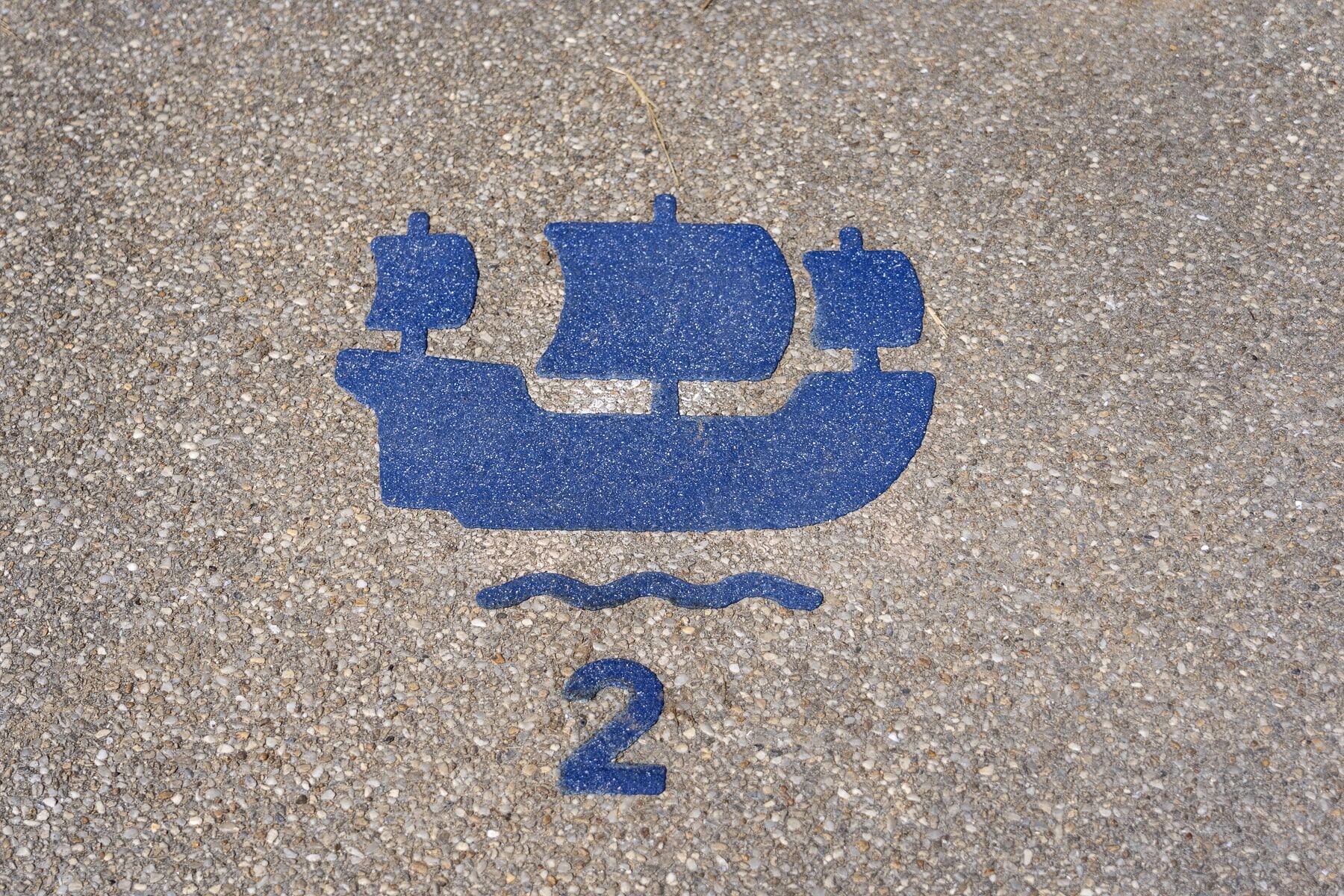
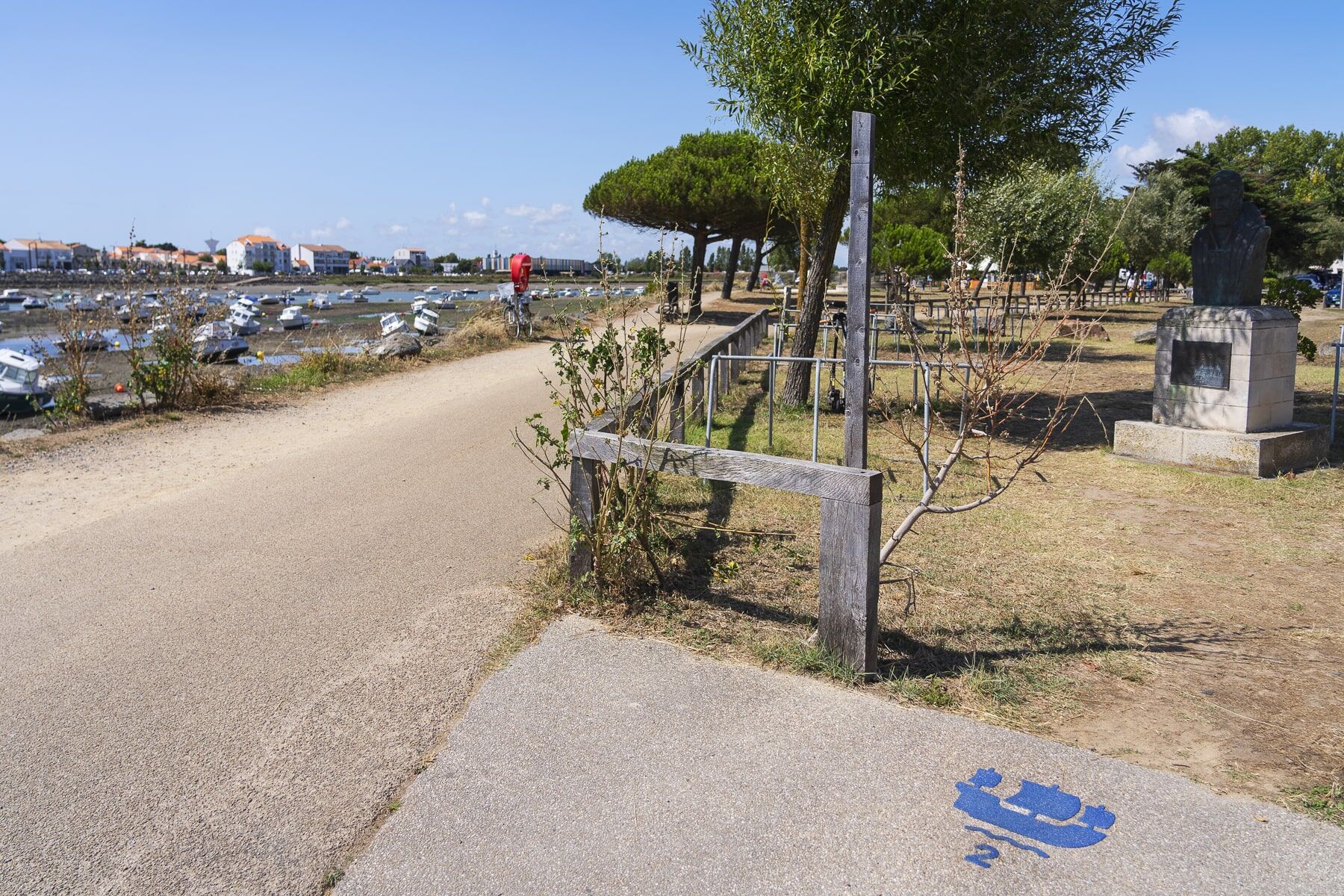
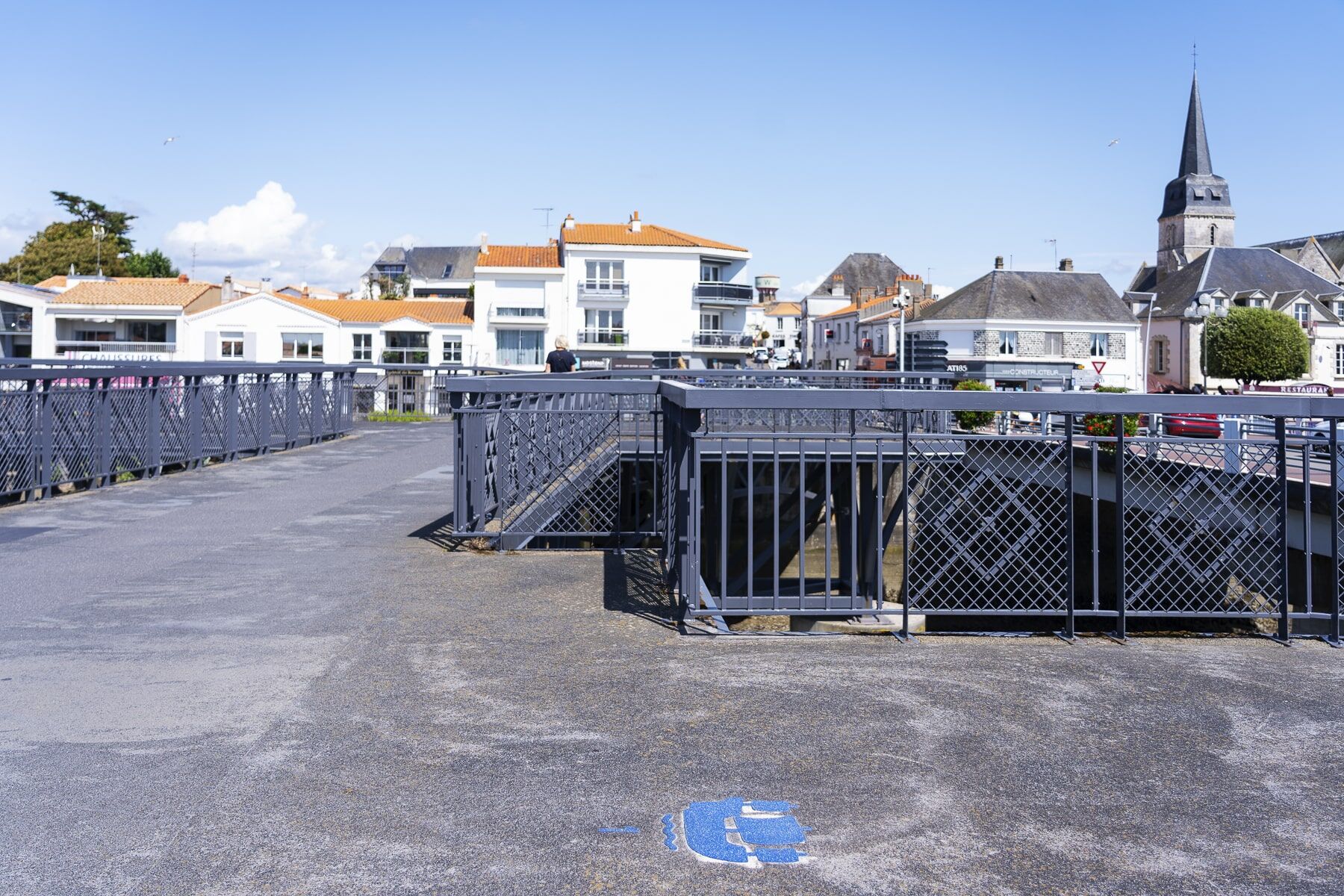
Blue caravels painted on the ground
Oblíbené prohlídky v okolí
- 5,0
LOOP N°16 - GIVRAND
světloJízda na kole 19,0 km BOUCLE N°22 - SAINT HILAIRE DE RIEZ
světloJízda na kole 25,8 kmVIGNES ET CAMPAGNE CIRCUIT N°3
středníTuristika 13,5 kmBOUCLE N°9 - COËX
světloJízda na kole 13,3 kmA feast for the eyes and easy on the legs! (2 days / 3 nights)
světloJízda na kole 51,4 kmTERROIR DE BREM SUR MER" WINE ROUTES (VELO)
světloJízda na kole 32,5 kmWINE ROUTES "TERROIR DE BREM SUR MER"
světloTuristika 30,6 kmBOUCLE N°27 - TOUR DU PAYS DE ST GILLES
středníJízda na kole 97,5 kmLOOP No. 4 - BREM SUR MER
světloJízda na kole 12,8 kmBOUCLE N°15 - GIVRAND
světloJízda na kole 8,23 km
Pěší turistika a stopování

Nenechte si ujít nabídky a inspiraci pro vaši příští dovolenou
Vaše e-mailová adresa byl přidán do poštovního seznamu.